Every yard has practical areas that are hard to make attractive. Trash cans, air conditioning units, utility boxes, pool equipment, garden storage, and service zones all need to stay accessible, but they do not need to be the first thing people notice.
That is where the right trellis can make a big difference. Backyard trellis ideas are not just about adding charm or supporting climbing plants. A well-planned trellis can screen everyday eyesores, add structure to the landscape, and make an outdoor space feel more finished.
The best trellis does more than cover something up. It fits the home, allows airflow where needed, leaves room for maintenance, and looks like it belongs in the yard. Whether the goal is privacy, cleaner curb appeal, or a better transition between outdoor spaces, a trellis should solve a practical problem while adding craftsmanship to the property.
Why Trellises Work So Well for Backyard Screening
A trellis is a framed outdoor structure that can be used for screening, privacy, plant support, or visual separation. It may be freestanding, attached to another structure, or built as part of a larger outdoor feature.
Lattice trellis panels are especially useful because they provide partial coverage without the heavy feeling of a solid wall. The open pattern lets light and air move through while softening the view of less attractive areas.
That balance is what makes a trellis so versatile. A full fence can sometimes feel too closed off, especially near a patio, walkway, or garden. A trellis gives you coverage while keeping the yard open and inviting.
A trellis can help when you want to:
- Block the view of trash cans or utility areas
- Add privacy near a patio or seating space
- Create a backdrop for planting beds
- Support climbing plants
- Define a garden path or transition area
- Make an exposed side yard feel more intentional
The right backyard trellis design should feel like part of the landscape, not like a quick cover-up.
Backyard Trellis Ideas for Common Yard Eyesores
A trellis to hide backyard eyesores works best when it is planned around the specific item being screened. Trash bins have different needs than an AC unit. Utility boxes have different access requirements than a garden storage area.
Common yard eyesores that can often be screened with a trellis like enclosure include:
- Trash and recycling bins near a garage or side yard
- Air conditioning units along the home
- Utility meters or service boxes
- Pool equipment
- Compost areas
- Garden tools or storage corners
- Neighboring views near patios or seating areas
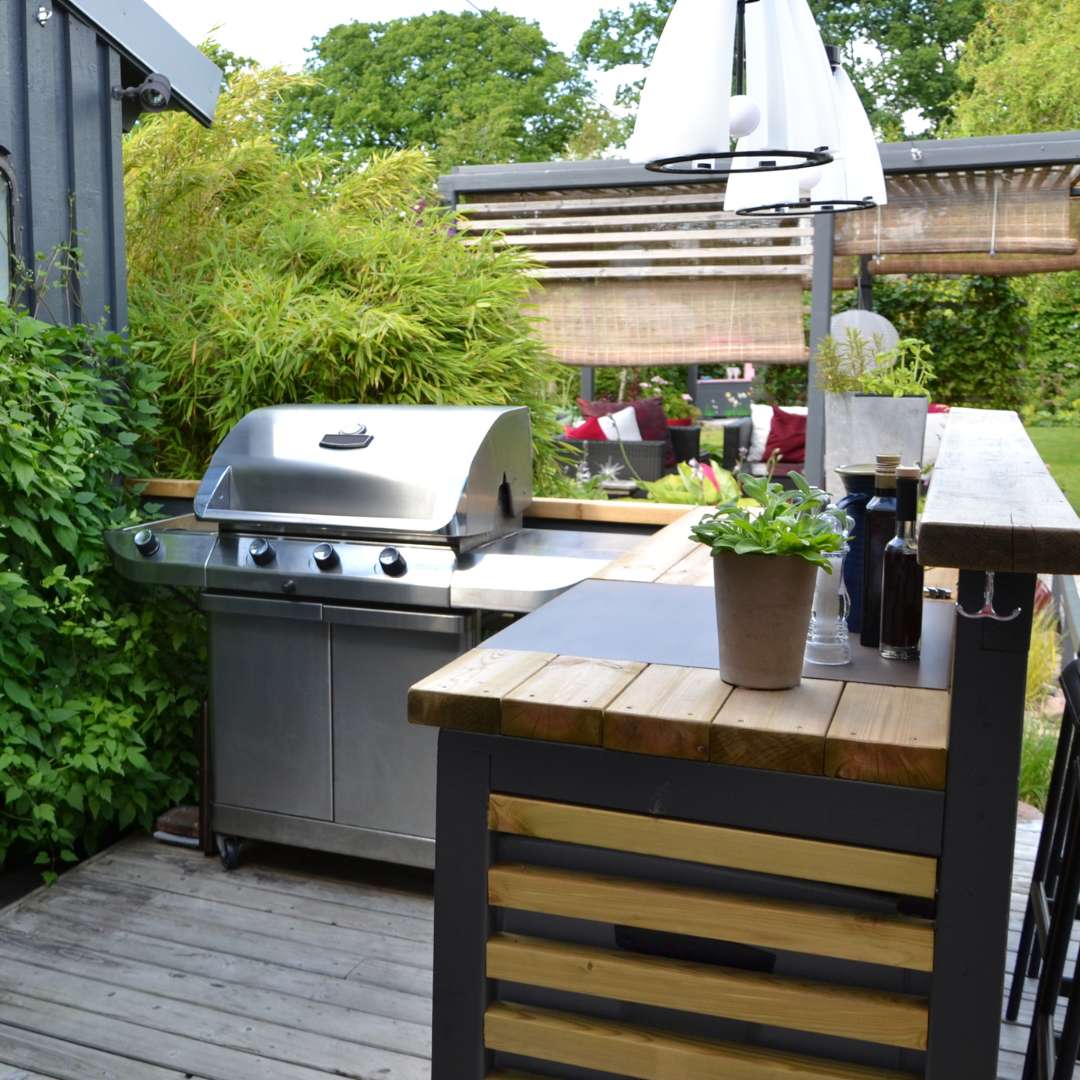
In the wood lattice project shown here, the framed screen helps contain a grill and outdoor equipment area near the home. The open grid pattern keeps the structure from feeling too heavy, while the surrounding frame gives the area a more finished, intentional look than exposed equipment alone.
For trash cans, a trellis may be part of a larger enclosure that keeps bins organized and less visible from the driveway or backyard. Around grills, pool equipment, or other outdoor service areas, lattice can help define the space and reduce visual clutter while still keeping the area accessible.

This is where custom-built screening has an advantage. A standard panel may be too short, too narrow, or awkward for the space. A custom trellis design can be built around the layout of the property, the main viewing angles, and the practical needs of the area.
Lattice Trellis Panels That Add Privacy Without Closing Off the Yard
Lattice trellis panels are one of the most popular ways to screen a yard because they offer coverage with a lighter appearance. They can soften a view, create privacy, and add a more crafted look to an outdoor space.
The panel style matters. Different lattice patterns create different levels of coverage and visual weight.
A few common options include:
- Tighter lattice patterns for more immediate screening
- Wider grid panels for a more open feel
- Diagonal lattice for a traditional look
- Square lattice panels for a cleaner, more structured appearance
- Painted or stained wood panels to coordinate with surrounding outdoor features
For the custom carpentry project in Arlington Heights shown to the right, the custom lattice panels create a defined backdrop for the patio without making the space feel closed off. The darker finish, substantial posts, and diagonal pattern give the outdoor dining area more privacy while still allowing light and visibility through the panels.

Using a Trellis Around an Air Conditioner
Many homeowners want to hide an air conditioner with trellis screening because AC units are often placed in visible side yards, near patios, or along walkways. A trellis can help, but this is one area where planning is especially important.
An air conditioner needs open space around it to function properly. If the screen is too close, too solid, or difficult to move around, it can interfere with airflow or make service harder. The goal is to reduce the visual impact without creating a problem for the equipment.
A trellis for privacy around an AC unit should allow for:
- Open airflow around the unit
- Clearance for service access
- Enough height to screen the view from key areas
- A layout that does not trap leaves or debris
- A style that fits the home and surrounding yard
The AC screen shown above is a good example of how lattice can soften the view of mechanical equipment without fully enclosing it. The open panels help reduce visibility from the yard while still leaving space for airflow, landscaping, and future service access. This is especially helpful when the air conditioner sits along a visible side yard or near a garden bed.

Wooden Trellis Panels and Material Choices
Wooden trellis panels are a popular choice because they bring warmth, texture, and a custom-built feel to the yard. Wood can be crafted in different styles, painted or stained, and built to coordinate with decks, pergolas, fences, planter boxes, or trim details on the home.
Material choice should be based on more than appearance. Homeowners should also think about how the trellis will be used, where it will be placed, and how much exposure it will have to the elements.
Before choosing a trellis material, consider:
- Whether the trellis will support climbing plants
- How much sun, moisture, and wind the area receives
- Whether the screen needs to match a deck, fence, or pergola
- How much privacy is needed
- What maintenance requirements are reasonable over time
Chicagoland Custom Trellis Project
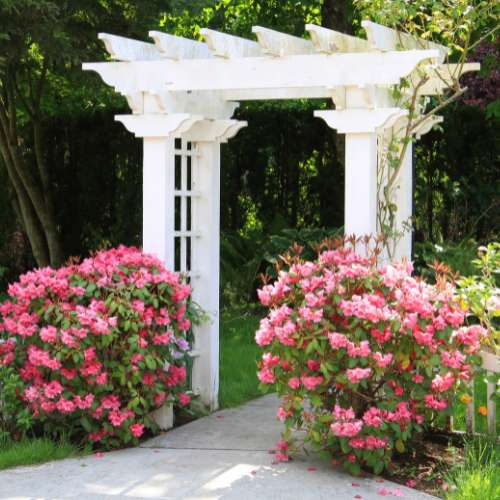
In this Chicagoland custom trellis project shown below, the white lattice structure works closely with the planting bed instead of simply standing in front of it. The open framework adds height behind the garden while giving climbing plants room to grow over time. As the landscaping fills in, the trellis becomes part of the planting plan rather than a separate screen.
This is one of the biggest advantages of a trellis compared to a solid privacy wall. It can screen, support plant growth, and add structure all at the same time.
For properties in Chicagoland and Southern Wisconsin, outdoor structures need to be built with Midwest weather in mind. Seasonal moisture, freeze-thaw cycles, wind, and sun exposure can all affect how a trellis performs over time. Strong construction, proper anchoring, and suitable materials help the finished structure last.

Using Climbing Plants to Create a Living Trellis Screen
A trellis can provide screening on its own, but plants can help it feel softer and more natural. Climbing plants add texture, seasonal interest, and additional coverage over time. This works especially well around gardens, patios, side yards, and areas where the homeowner wants privacy without a heavy structure.
A living trellis screen can be useful when you want to:
- Soften the view of a service area
- Add greenery near a patio or walkway
- Create a more natural privacy screen
- Tie the trellis into nearby planting beds
- Add seasonal color or texture
Plant growth should be considered before the trellis is built. Some climbing plants become heavy as they mature. Others need regular pruning to stay neat. If the trellis is near an AC unit, plants should be managed carefully so they do not block airflow or interfere with service access.
A trellis that supports plants should be strong enough for future growth, not just the way the yard looks on the day it is installed.
Trellis Designs That Make the Yard Feel More Finished
A backyard trellis design should feel connected to the rest of the outdoor space. When it does, the structure can improve the yard beyond the area it screens.
A trellis can define a garden path, frame an entry point, create a backdrop for planting beds, or help divide a large backyard into more intentional areas. Instead of only hiding something, it gives the yard a clearer shape.
Custom Lattice Fence project in Winnetka, IL
The Winnetka lattice fence project shown below is a strong example of a trellis-style feature that makes a landscape feel more complete. The arched entry, curved top rail, and white lattice panels create a defined garden passage while keeping the area open and inviting. It adds privacy, but it also creates a sense of arrival.
That kind of detail matters when a trellis is placed near walkways, patios, or garden transitions. The structure should not feel like it was added only to block a view. It should help the surrounding space feel more planned, balanced, and finished.
A finished-looking trellis often includes thoughtful details such as:
- Posts that feel proportionate to the panels
- A top rail or cap that gives the structure a completed look
- A color or finish that relates to the home
- A panel pattern that fits the style of the yard
- Proper placement so the trellis works with landscaping and hardscaping

Common Trellis Mistakes to Avoid
A trellis may seem simple, but a few common mistakes can make it less effective.
One mistake is choosing a panel that is too small. The trellis should be sized based on the view you want to block, not just the size of the object itself. A trash can or utility box may still be visible from a window, driveway, patio, or neighboring yard if the screen is not tall or wide enough.
Another mistake is placing the trellis too close to equipment. This is especially important for AC units. Screening should never make it difficult for the unit to operate or for a technician to reach it.
Homeowners also sometimes choose a style that does not match the property. A trellis should complement the home, hardscaping, and surrounding landscape. When the style, color, or scale feels disconnected, the screen can stand out more than the item it was meant to hide.
Common mistakes include:
- Blocking access to trash cans or service areas
- Using a pattern that provides too little screening
- Forgetting how plants will grow over time
- Choosing lightweight materials for an exposed area
- Placing panels too close to AC equipment
- Adding a trellis without considering the rest of the yard
Pro Tip
The most successful trellises look intentional. They solve a practical issue while adding structure, privacy, and craftsmanship to the space.
When a Custom Trellis Makes Sense
A custom trellis design is worth considering when the area has unusual dimensions, multiple viewing angles, or specific access needs. Many backyard eyesores are located in awkward places. A narrow side yard, sloped area, visible utility zone, or patio edge may not work well with a standard panel.
Custom-built trellises can be crafted to fit the property instead of forcing the property to fit a prefabricated product. The height, width, pattern, finish, and placement can all be tailored to the space.
A custom trellis may be the better choice when:
- The area is highly visible from a patio, driveway, or window
- The space has unusual measurements
- The screen needs to match existing outdoor structures
- The trellis will support climbing plants
- Equipment access or airflow needs to be considered
- A standard panel would look temporary or unfinished
Craiger Custom Design builds custom trellises, lattice features, trash enclosures, AC screens, pergolas, arbors, decks, patios, planter boxes, and other outdoor carpentry projects. That broader experience matters because screening often works best when it connects with other parts of the property.
A trellis near trash cans may work better as part of a custom enclosure. A privacy screen beside a patio may pair well with planter boxes or nearby seating. A garden trellis may look more complete when it relates to a walkway, fence, or pergola.
Common Questions About Backyard Trellis Ideas
The right size depends on what you want to screen and where it is viewed from. A trellis may need to be taller or wider than the item itself if the view comes from a patio, driveway, window, or neighboring yard. The best size is based on sightlines, access needs, and how much privacy you want.
A trellis can be a better choice when you want screening without a heavy, closed-off look. A fence may offer fuller coverage, but lattice trellis panels often feel more decorative and open. For trash bins, a custom enclosure with trellis-style panels can provide both structure and curb appeal.
The lowest-cost options are usually basic landscaping or a simple prefabricated screen, but those usually do not fit the space well and aren’t durable. A custom-built trellis is a stronger choice when the utility area is highly visible or when the screen needs to match the rest of the yard.
Yes, a screen can be built around an AC unit when it is planned carefully. The structure should not block airflow, prevent maintenance access, or trap debris around the equipment. A custom-built AC screen or trellis is often the best option because it can be sized and placed correctly.
Make the Practical Parts of Your Yard Look Intentional
Every yard has service areas. The goal is not to pretend they are not there. The goal is to make them feel less distracting and more connected to the rest of the property.
A well-built trellis can hide backyard eyesores, add privacy, support climbing plants, and create a more finished outdoor space. Whether the look is a garden lattice screen, a trellis-style entry, or custom panels near a patio, the right structure can improve both function and appearance.
Craiger Custom Design helps homeowners plan custom-built trellises, lattice screens, trash enclosures, and AC screens that fit the property and hold up over time. To start thinking through the right option for your yard, explore examples of completed work or reach out to discuss
a structure built around your space.